


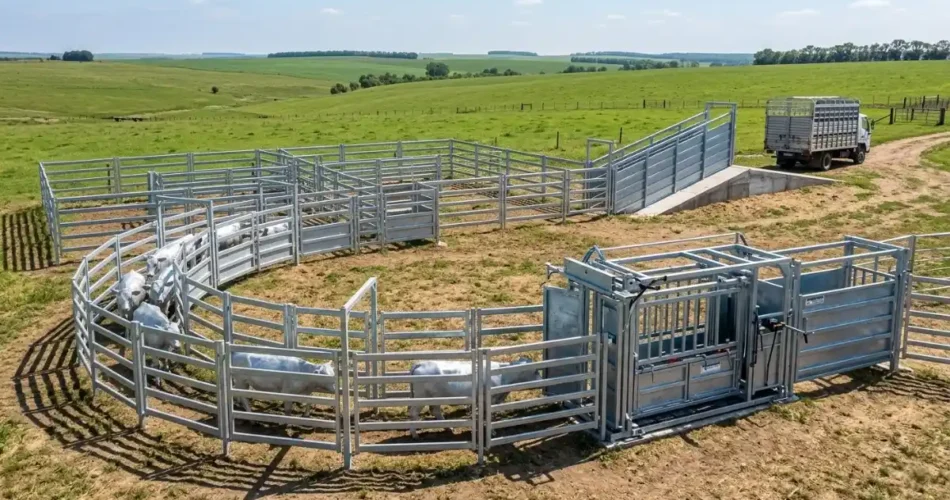
If you’re building or upgrading a cattle yard, one company worth knowing is 4 Rivers Ranch. They build galvanized steel cattle handling systems designed to be operated by one person - no extra crew needed. Their equipment is heavy-duty, built for daily ranch use, and shipped across the country. If you want a system that’s safe, fast, and doesn’t wear you out, that’s the kind of setup this article is about.
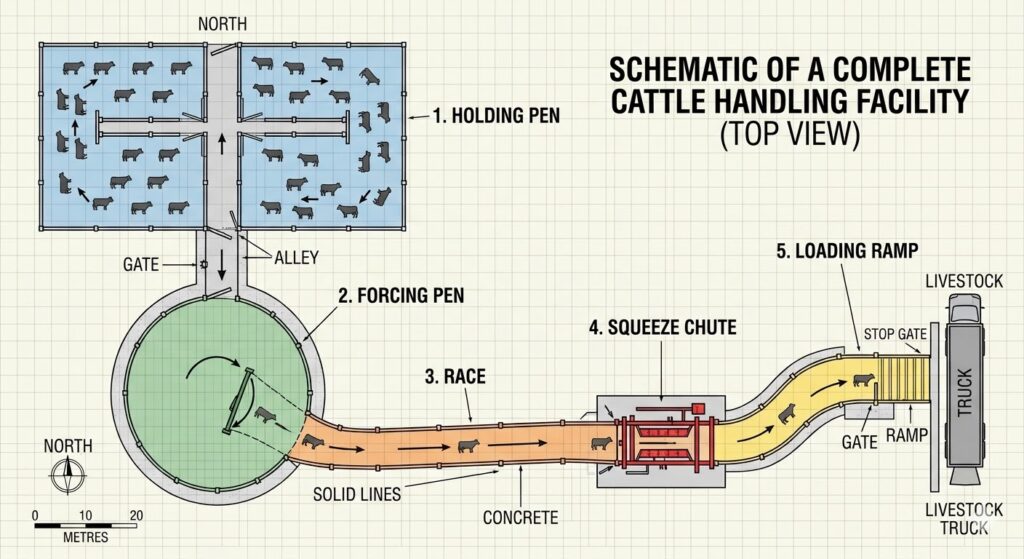
A functional cattle yard needs five things: holding pens, a forcing pen, a race alley, a squeeze chute with headgate, and a loading ramp. The right layout makes cattle move on their own - less pushing, less stress, less time. You don’t need to spend a fortune, but you do need to get the basics right from the start.
Why This Matters
Most ranchers who struggle with cattle handling have one problem in common: a yard that wasn’t planned well. Cattle won’t move through a bad layout no matter how hard you push. And if your squeeze chute is awkward or your headgate is slow, every single animal becomes a fight. Getting the equipment and design right once saves years of frustration.
What Is a Cattle Yard? Understanding Livestock Handling Facilities
A cattle yard is a system of pens, alleys, and working equipment that lets you safely hold, sort, and process cattle. It’s where you vaccinate, weigh, load, and vet your animals. Without one, most of that work becomes dangerous and slow.
The main zones of any cattle yard
Every functional yard has the same basic layout:
- Holding pen - where cattle wait before processing
- Forcing pen - a smaller pen that funnels cattle into the race
- Race (alley) - a narrow single-file corridor leading to the chute
- Squeeze chute + headgate - where you work each animal
- Loading ramp - for moving cattle in and out of trailers
Why layout matters more than equipment
You can have the best squeeze chute on the market and still waste an hour per session if the pens are laid out wrong. Cattle naturally move in curves and circle back toward where they came from. A round forcing pen uses that instinct - cattle walk in themselves instead of being pushed.

Essential Cattle Handling Equipment Every Yard Needs
You don’t need every gadget. But there are five pieces of equipment that no working cattle yard can skip.
Cattle yard panels
Panels form the structure of your entire yard. They need to be tall enough (minimum 5 ft for adult cattle), strong enough to take impact, and built to last. Galvanized steel panels outlast raw steel by decades and don’t need painting or rust treatment.
4 Rivers Ranch panels are made from fully galvanized steel with 2 3/8″ round posts - no sharp edges, no exposed bolt ends. Each panel arrives ready to connect. No extra hardware to hunt for.
What to look for in cattle yard panels:
- Height: 5–6 ft minimum
- Material: galvanized steel over raw steel, always
- Gate placement: at least every third panel
- Rail spacing: tight enough that calves can’t push through
Squeeze chute
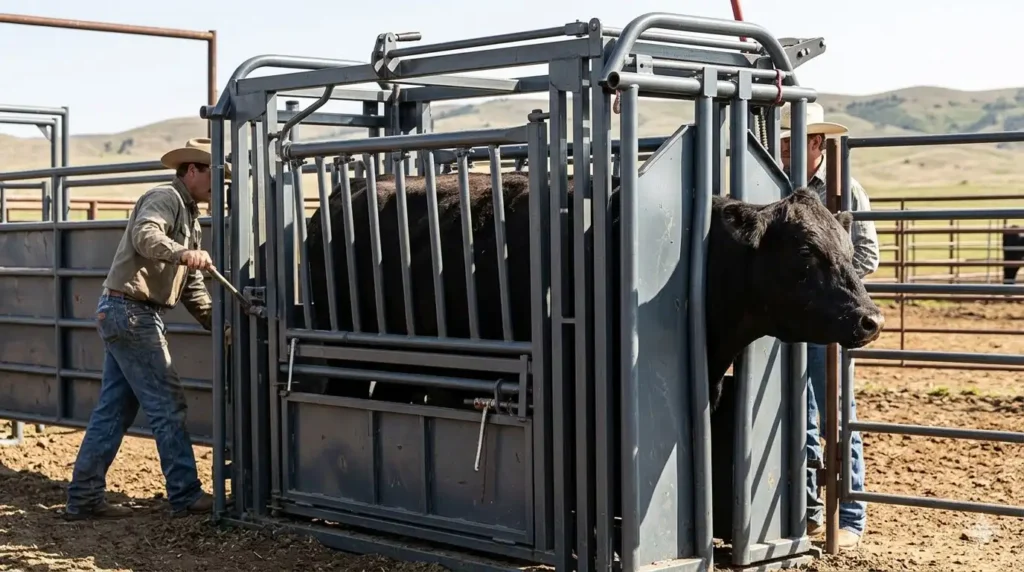
The squeeze chute is where the real work happens. It holds the animal still from both sides while the headgate secures the head. Without a good chute, vet work, tagging, and vaccinations are risky for both you and the animal.
4 Rivers Ranch offers the 4 Diamond Vet Squeeze Chute - parallel side squeeze, full vet access, auto-lock on the tailgate, and built for single-person operation. Everything is reachable from one position.

Cattle headgate
The headgate sits at the front of the squeeze chute and holds the animal’s neck. Two main types:
| Type | How It Works | Best For |
|---|---|---|
| Self-catching | Locks when animal enters | High-volume processing |
| Manual | Operator closes by hand | Precision work, nervous animals |
| Positive pivot | Holds neck without hard pressure | Bulls, large breeds |
Self-catching headgates are faster. Manual gives you more control. For most operations, self-catching is the right call.
Loading ramp cattle
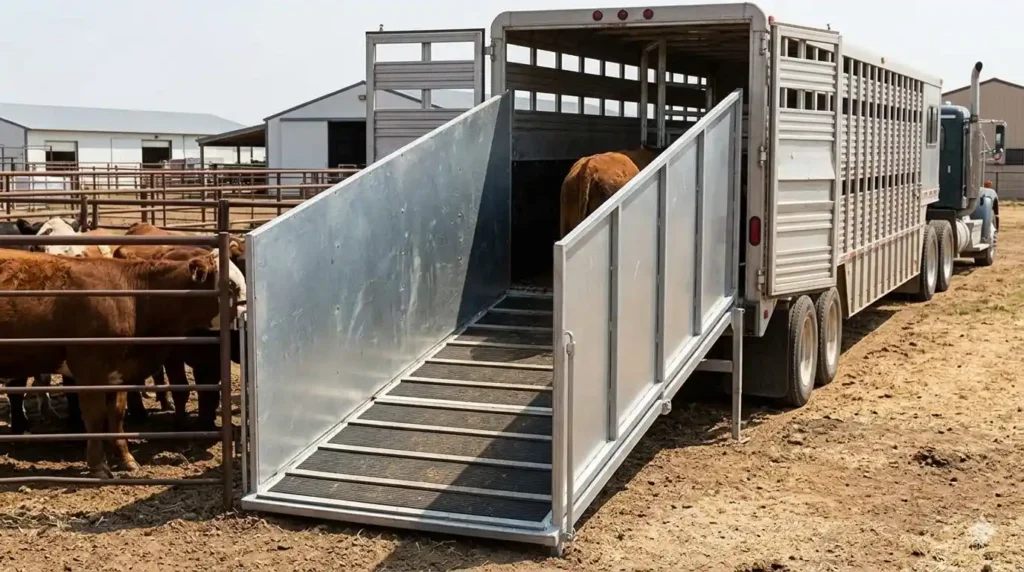
A loading ramp sounds simple. But a bad one costs you time every single session. Key specs:
- Max incline: 25 degrees
- Surface: non-slip ribbed steel or rubber matting
- Side walls: solid, so cattle can’t see out and balk
- Width: match your trailer gate width exactly
Cattle drafting gate
A drafting gate lets you sort cattle into two or three different pens without stopping the flow. One person can stand at the gate and direct each animal as it exits the chute. No extra help needed. 4 Rivers Ranch drafting gates rotate 360° and lie flat against the panel - no gap for an animal to get stuck
Cattle Yard Design: How Layout Affects Animal Flow and Safety
Bad design is the number one reason cattle yards fail. It’s not about the price of panels - it’s about how the whole thing connects.
How cattle move
Cattle have a flight zone - a bubble of personal space. Step into it from behind, they move forward. Step in front of it, they stop. A good yard uses this. The race curves so animals can’t see the end. The forcing pen is round so cattle move in a circle naturally. The chute is at the end of a straight run.
Five design rules that actually matter:
- Round or curved forcing pens outperform square ones every time
- The race should curve - cattle go forward when they can’t see what’s ahead
- No shadows at the chute entrance - cattle stop at dark spots
- Metal gates shouldn’t rattle - add rubber padding if needed
- Drainage comes first - wet, muddy surfaces cause injuries
Sun and wind orientation
Face the working end of the yard away from the prevailing sun direction. Cattle hesitate to walk into bright light. This one detail is free to implement and saves real time.
Space per animal
Don’t overcrowd holding pens. Stressed, packed cattle are harder to move and more dangerous to handle.
| Pen Type | Space Per Animal |
|---|---|
| Holding pen | 20–40 sq ft depending on breed |
| Forcing pen | 10–15 sq ft (short-term only) |
| Race width | 26–30 inches (single file) |
| Loading ramp width | Match trailer gate |
4 Rivers Ranch Cattle Corral Designs: Solutions for Every Herd Size
If you want a ready-made cattle yard system that works from day one, 4 Rivers Ranch has designs for every operation size. Their corrals are built by ranchers, for ranchers - the layouts come from real-world use, not a drawing board.
Small corrals: 3–28 head
Models 4R15, 4R20, and 4R28 are for small family operations. The 4R15 comes with a 90° self-locking sweep, galvanized panels, and an expandable design if you grow your herd later. One person can set it up and run it alone.
Medium corrals: 35–100 head
Models 4R35 through 4R100 cover the most common ranch sizes. The 4R68 is one of their most popular - full race, forcing tub, squeeze chute, and drafting gate, all operated by one person. A real customer said: “We used our 4 Rivers Cattle Pens for the first time this weekend. Everything works fantastic from the tub to the headgate and squeeze chute… My three teenage boys had no idea how much easier it would be”.

Large corrals: 120–200+ head
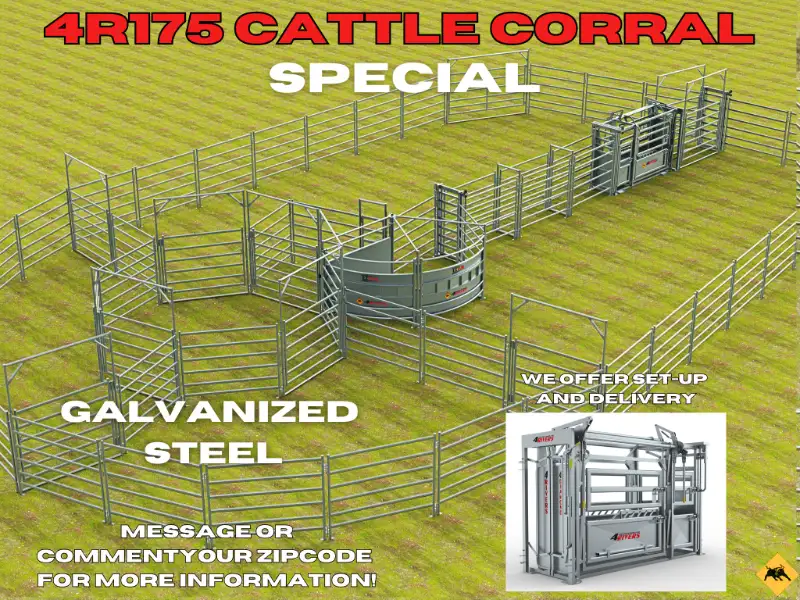
The 4R175 is designed as a true one-person operation even at that scale. Sorting, working, and loading - all from a single position. Custom configurations available for larger operations.

Steel Cattle Panels vs. Portable Panels: Which Works Best for Your Yard?
Both have a place. The choice depends on how permanent your setup is and how often you move cattle.
| Feature | Permanent Steel Panels | Portable Cattle Panels |
|---|---|---|
| Durability | 20–30+ years | 10–15 years |
| Flexibility | Fixed layout | Reconfigurable |
| Installation | Higher upfront cost | Minimal setup |
| Strength | Higher - better for bulls | Moderate |
| Best for | Permanent ranch yards | Rotational grazing, leased land |
| Cost per panel | Higher quality, longer ROI | Lower upfront |
For most ranches, the smart move is a permanent core - race, chute, and forcing pen - with a few portable panels for extra holding space when needed.
How to Choose the Right Squeeze Chute for Your Cattle Handling System
Manual vs. hydraulic
Manual chutes work fine for most ranch operations. They’re cheaper, don’t need power, and are easier to maintain. Hydraulic chutes are faster for large-scale commercial work but cost three to five times more and need regular servicing.
For one-person operations under 200 head, manual is usually the right call.
What to check before you buy
- Squeeze width range: should go from 29–32 inches down to about 12 inches
- Floor type: ribbed or grooved - animals shouldn’t slip
- Side door access: full open for vet work on both sides
- Headgate width: minimum 27 inches
- Tailgate: auto-lock keeps the operator safe when the animal is in the chute
- Control placement: reachable from front and rear for one-person use
Working alone
If you work without a helper, look for:
- Foot pedal for opening the palp door (keeps hands free)
- Controls accessible from both sides
- Auto-catch headgate that locks without manual input
- Auto-lock tailgate that closes when the animal enters
The 4 Rivers Ranch 4 Diamond Squeeze Chute hits all of these. One person, one system.
Frequently Asked Questions About Cattle Yard
Around 20–40 sq ft per animal, depending on breed size. Overcrowding makes cattle anxious and harder to move. Keep the pen at about 75% capacity for easiest flow.
Yes - if the equipment is designed for it. Systems like those from 4 Rivers Ranch are specifically built for single-person operation, with controls reachable from one position and auto-locking gates that don’t need a second set of hands
A squeeze chute is the full unit - it holds the animal’s body from both sides. The headgate is the front section that holds the head and neck. The headgate is part of the squeeze chute, not a separate piece.
20–30 years with normal use. Galvanizing protects the steel from rust even in wet conditions. Raw steel panels will need treatment within 3–5 years.
Conclusion
A well-built cattle yard isn’t expensive - it’s planned well. Get the layout right first: round forcing pen, curved race, chute at the end. Then buy quality where it counts - squeeze chute, headgate, and galvanized panels. Skip those corners and you’ll rebuild sooner than you planned.
The biggest mistake ranchers make is designing for how many cattle they have now, not how many they might have in three years. Start with a system that can expand. Companies like 4 Rivers Ranch build their corrals with that in mind - modular, scalable, and ready to grow with your operation. If you’re starting from scratch or upgrading, look at their corral designs as a reference point for what a functional one-person system actually looks like.