

Industrial container recycling and reconditioning is the process of cleaning, testing, repairing, and certifying used drums and IBCs for safe reuse. Reconditioning reduces carbon emissions by up to 70% compared to manufacturing new containers. The global reconditioned IBC market is projected to grow from $2.4 billion in 2025 to $4.8 billion by 2035, driven by circular economy adoption and cost optimization. Companies like reconditioned drums specialize in IBC tote recycling, industrial drum services, and container reconditioning, helping businesses manage waste responsibly while extending container lifecycles.
Why Industrial Container Management Matters
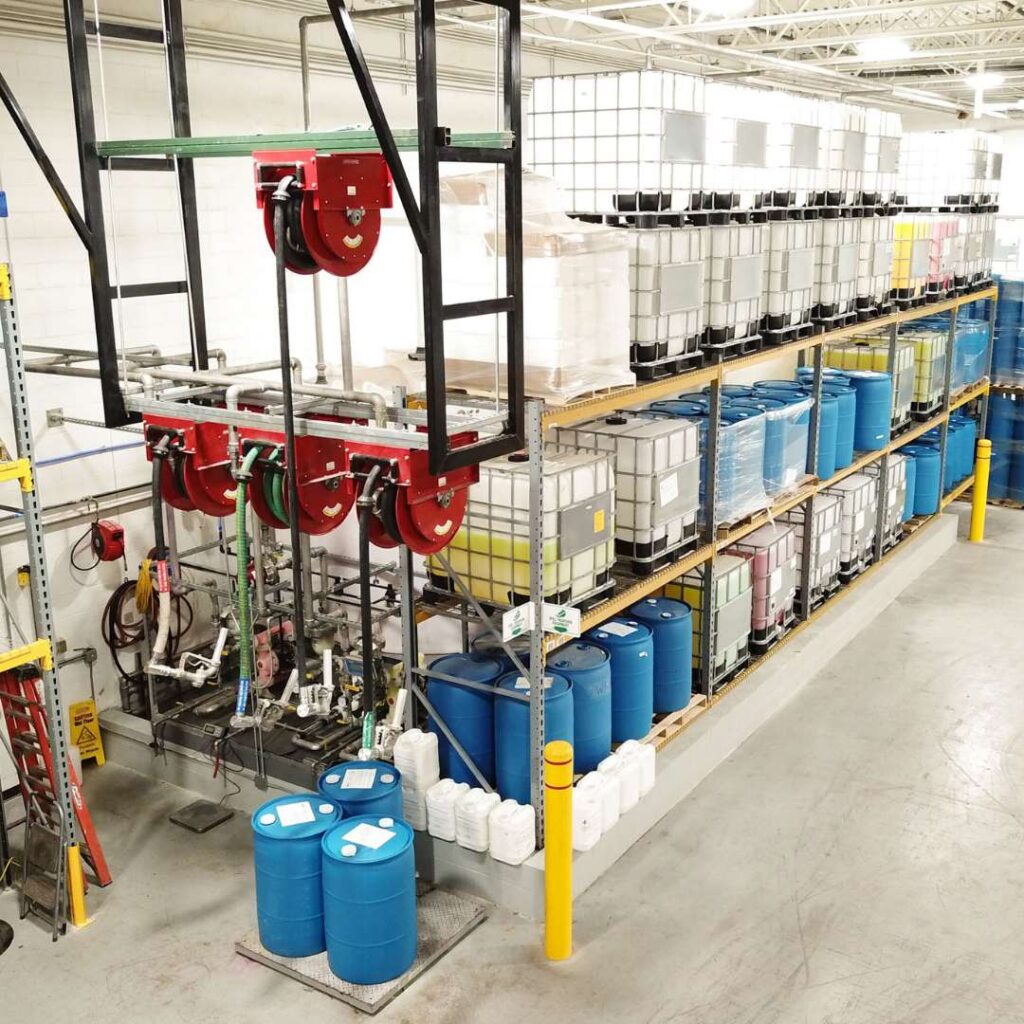
Industrial containers—steel drums, plastic drums, and intermediate bulk containers (IBCs)—are the backbone of global supply chains, transporting chemicals, food products, pharmaceuticals, and agricultural materials worldwide. However, their disposal presents significant environmental and economic challenges.
The industrial packaging recycling services market reached $67.76 billion in 2025, reflecting growing corporate commitment to sustainable practices. Rather than discarding containers after single use, forward-thinking businesses are embracing industrial container recycling and reconditioning as a strategic approach to reduce waste, cut costs, and meet environmental compliance standards.
Specialized service providers like Patrick J. Kelly Drums have been at the forefront of this industry for over 40 years, offering comprehensive solutions including IBC tote recycling, drum disposal, and container reconditioning across the Mid-Atlantic region.
What Is Industrial Container Reconditioning?
Definition and Core Concept
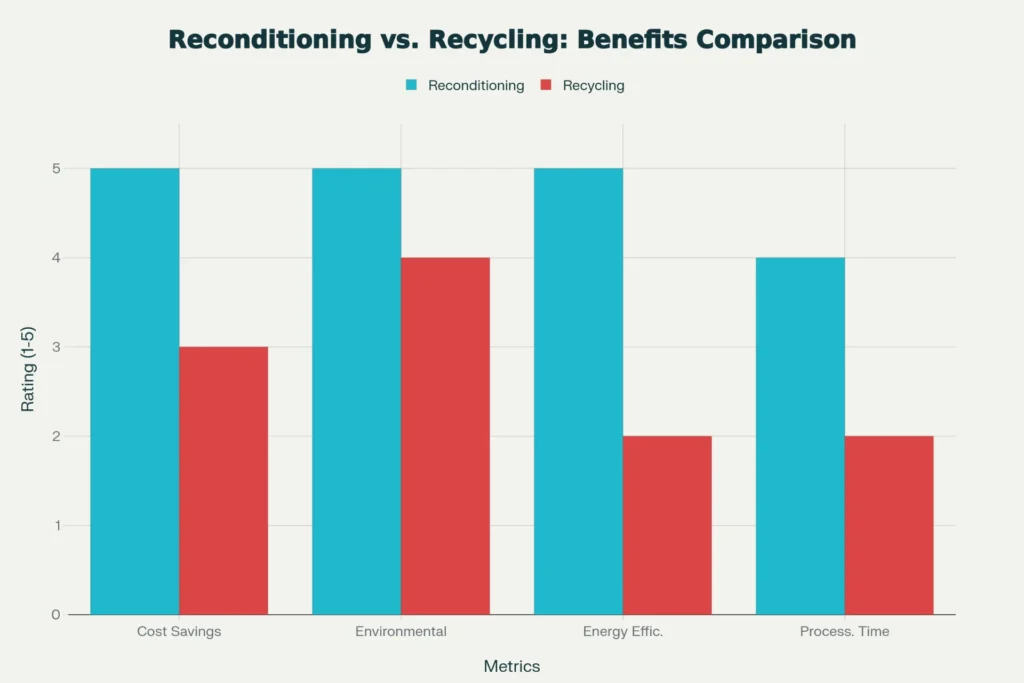
Container reconditioning is the process of restoring used industrial containers to a condition suitable for safe reuse. Unlike recycling—which breaks down materials into raw components—reconditioning maintains the container’s structural integrity while ensuring it meets regulatory standards for subsequent applications.
The reconditioning process typically includes:
- Thorough cleaning and chemical residue removal
- Structural inspection and pressure testing
- Repair and restoration of damaged components
- Quality certification per DOT/UN specifications
- Relining, repainting, or relabeling as needed
Reconditioning vs. Recycling: Key Differences
Types of Industrial Containers in Reconditioning
IBC Totes (Intermediate Bulk Containers)
IBCs are large-capacity containers typically holding 275-330 gallons of liquid or bulk materials. They consist of a plastic bottle (HDPE) housed within a steel cage frame mounted on a pallet.
Why IBC reconditioning is valuable:
- Single IBCs can save 205-243 lbs of CO2 when reconditioned vs. replaced
- Reconditioned IBCs cost significantly less than new units
- Plastic IBCs represent the largest segment of the reconditioning market due to high feasibility
Steel Drums
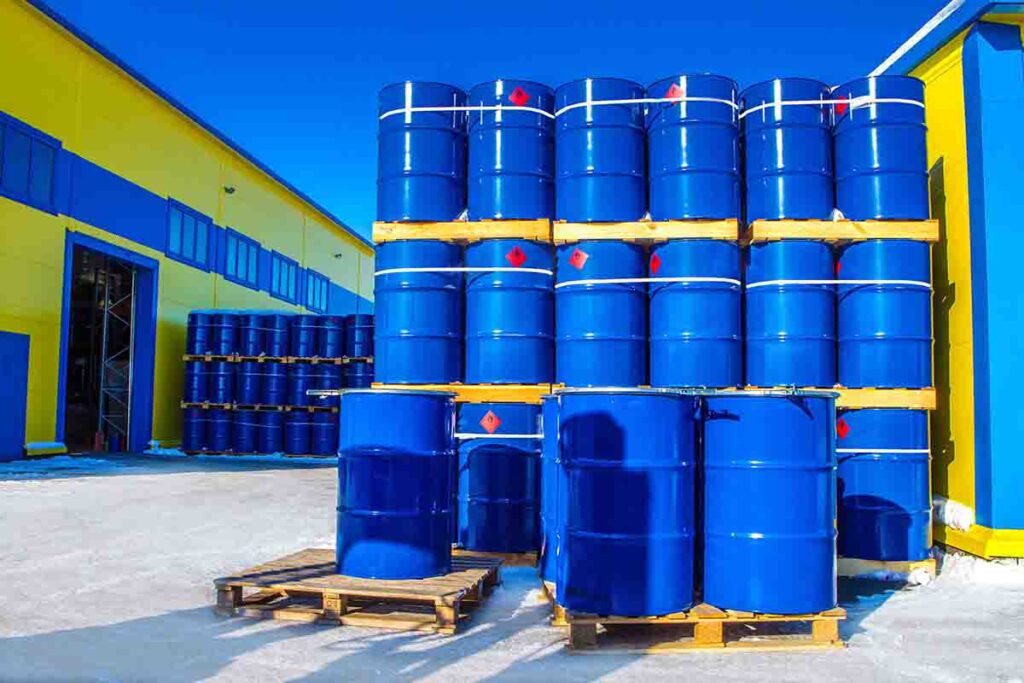
Steel drums (typically 55-gallon capacity) are workhorses for chemical, petroleum, and industrial applications. Their reconditioning involves:
- Furnace processing to combust residual materials (1200-1500°F)
- Surface preparation and recoating
- Pressure testing per DOT specifications
- UN certification for hazardous material transport
Plastic Drums
HDPE plastic drums offer chemical resistance and durability. Reconditioning includes:
- Multi-stage washing with detergents
- Interior and exterior inspection
- Leak testing
- Label removal and replacement
Fiber Drums
Fiber drums serve applications requiring lighter-weight containers. These undergo cleaning, liner replacement, and structural assessment before recertification.
The Industrial Container Reconditioning Process
Step-by-Step Workflow
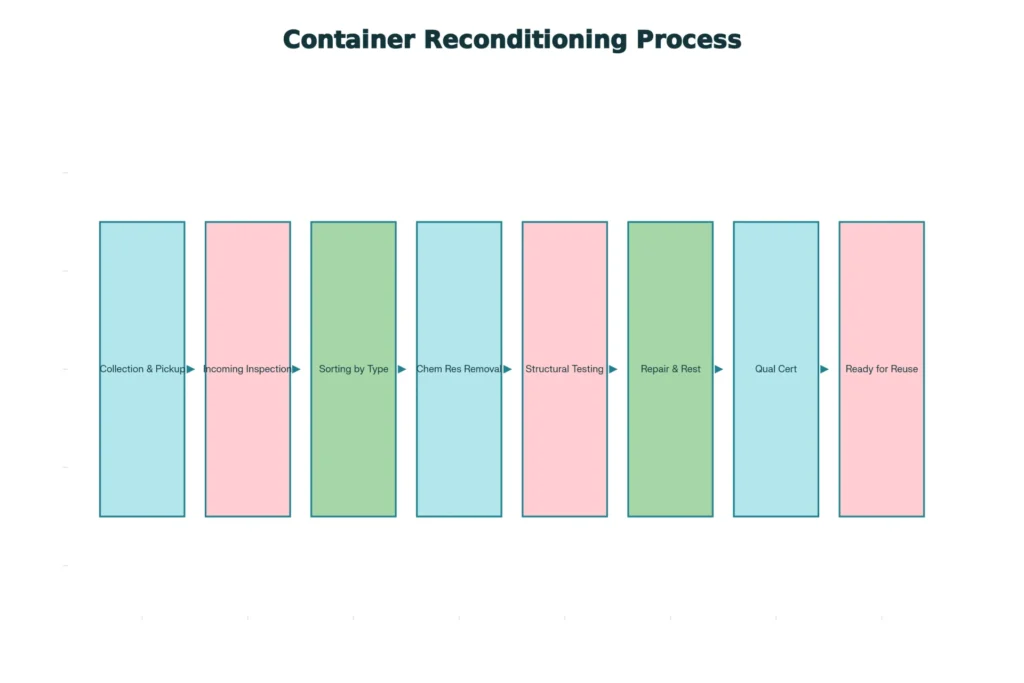
- Step 1: Collection and Pickup
Used containers are collected from manufacturing facilities, chemical plants, and distribution centers. Many reconditioning companies offer scheduled pickup services and return programs.
- Step 2: Incoming Inspection
Containers undergo initial assessment for:
Structural integrity
Contamination type and level
Previous contents documentation
Damage severity - Step 3: Sorting by Type
Containers are categorized by material (steel, plastic, fiber) and previous use. This determines appropriate cleaning protocols and reconditioning pathways.
- Step 4: Chemical Residue Removal
EPA-compliant cleaning processes include:
Degreasing and chemical neutralization
High-pressure washing (hot water and detergents)
Friction washing for stubborn contaminants
Surface preparation for coating - Step 5: Structural Testing
Rigorous testing ensures container integrity:
Pressure testing (often exceeding DOT requirements)
Leak detection
Wall thickness measurement
Metallurgical analysis for steel containers - Step 6: Repair and Restoration
Based on testing results:
Dent repair and surface restoration
Liner installation or replacement
Cage repair for IBCs
Recoating and repainting - Step 7: Quality Certification
Final verification includes:
Documentation per 49 CFR 178 requirements
UN rating maintenance
Certification marking
Compliance documentation - Step 8: Ready for Reuse
Certified containers return to circulation, often through the same supply chain that generated them.
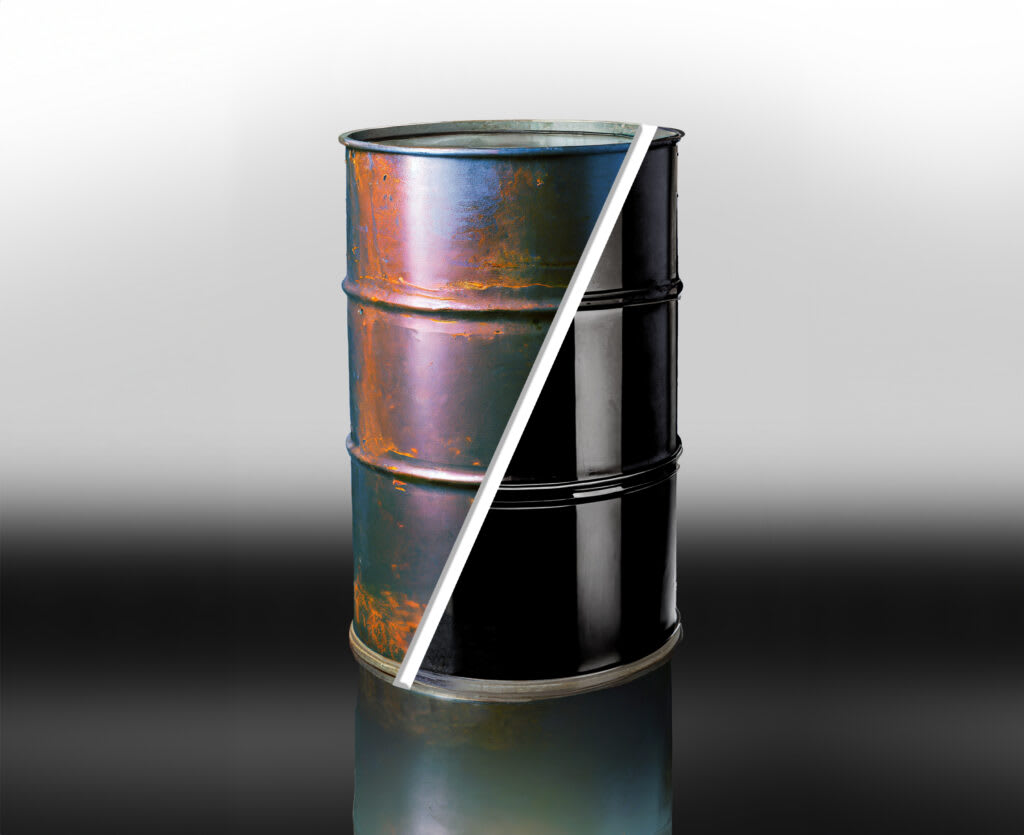
Environmental Benefits of Container Reconditioning
Carbon Footprint Reduction
Reconditioning dramatically reduces environmental impact compared to manufacturing new containers or disposing of used ones:
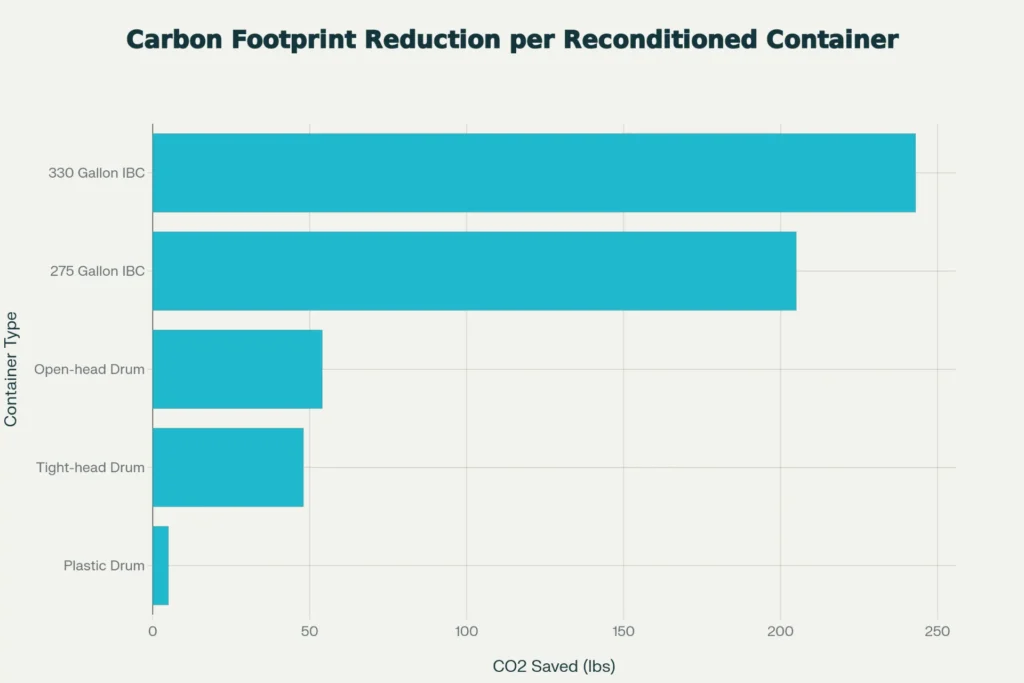
Key statistics:
- Reconditioning an IBC reduces its carbon footprint to 30% of a new container
- 330-gallon IBCs save 243 lbs CO2 per reconditioned unit
- 275-gallon IBCs save 205 lbs CO2 per unit
- Open-head steel drums save 54 lbs CO2 per unit
Waste Reduction
By extending container lifecycles through multiple reconditioning cycles, businesses:
- Prevent containers from entering landfills
- Reduce demand for virgin raw materials
- Support circular economy principles
- Minimize single-use packaging waste
Energy Conservation
Reconditioning requires significantly less energy than both manufacturing new containers and material recycling:
- No melting or reprocessing of materials
- Minimal resource extraction required
- Reduced transportation emissions through local reconditioning networks
Economic Benefits for Businesses
Cost Savings
Reconditioned containers typically cost 40-60% less than new equivalents while delivering comparable performance:
| Container Type | New Price (Approx.) | Reconditioned Price | Savings |
|---|---|---|---|
| 55-Gallon Steel Drum | $80-120 | $35-55 | 45-55% |
| 55-Gallon Plastic Drum | $60-90 | $25-40 | 50-60% |
| 275-Gallon IBC | $350-500 | $150-250 | 50-60% |
| 330-Gallon IBC | $400-600 | $175-300 | 50-55% |
Return-and-Recondition Programs
Many reconditioning companies offer R&R (Recondition and Return) programs that:
- Maximize existing container fleet investment
- Provide predictable container supply
- Reduce procurement complexity
- Ensure regulatory compliance
Compliance and Liability Management
Professional reconditioning ensures:
- DOT and UN certification maintenance
- EPA environmental compliance
- Proper hazardous material handling documentation
- Reduced environmental liability exposure
Market Overview and Growth Projections
Global Market Size
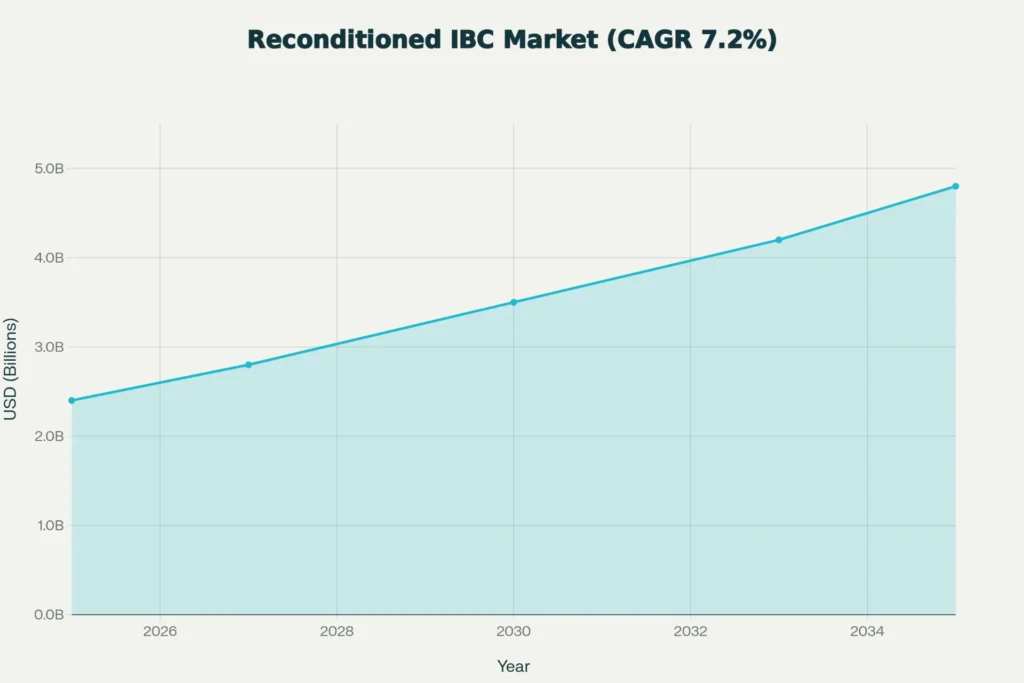
The industrial container recycling and reconditioning market shows strong growth trajectory:
- 2025: $2.4 billion (reconditioned IBC segment)
- 2030: $3.5 billion projected
- 2035: $4.8 billion projected
- CAGR: 7.2% (2025-2035)
Industry Distribution

Chemical and petrochemical applications dominate demand, representing 42% of reconditioned IBC consumption in 2025. These industries prioritize:
- Cost advantages over new containers
- UN-certified reconditioning for hazardous materials
- Reliable supply chain integration
Regional Growth
China’s reconditioned IBC market is expanding at 8.4% CAGR, driven by:
- Growing chemical production sector
- Government circular economy initiatives
- Industrial cost consciousness
Choosing a Container Reconditioning Partner
Key Selection Criteria
When evaluating reconditioning service providers, consider:
Certifications and Compliance:
- DOT certification for transportation containers
- UN rating capabilities
- EPA compliance for waste handling
- ISO quality management systems
Service Capabilities:
- Range of container types handled (steel, plastic, fiber, IBCs)
- Pickup and logistics services
- Return-and-recondition programs
- Geographic coverage
Quality Assurance:
- Testing protocols (pressure, leak, structural)
- Documentation and traceability
- Warranty on reconditioned products
- Inspection standards
Experience and Reputation:
- Years in operation
- Industry specializations
- Customer references
- Environmental track record
Example: Kelly Drums Services
Patrick J. Kelly Drums exemplifies comprehensive reconditioning services with over 40 years of industry experience. Their offerings include:
- IBC tote recycling and reconditioning
- Steel drum reconditioning and disposal
- Plastic drum processing
- Fiber drum services
- Scheduled pickup programs
- Facilities in Camden, Pennsauken, and New Hope
Their family-owned approach emphasizes environmental responsibility, regulatory compliance, and long-term customer relationships.
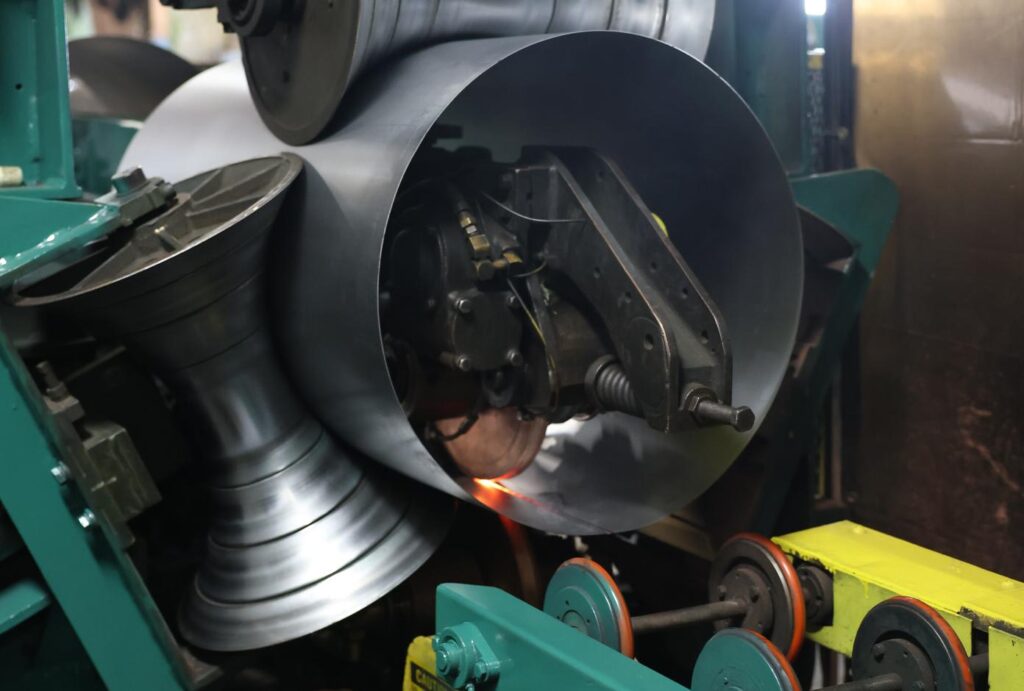
FAQ: Industrial Container Recycling and Reconditioning
Reconditioning cleans, tests, repairs, and recertifies containers for reuse while maintaining their original form. Recycling breaks down containers into raw materials (shredded plastic or melted steel) for manufacturing new products. Reconditioning uses less energy and maintains more value per container.
Industrial containers can typically be reconditioned multiple times depending on material, usage, and structural condition. Steel drums may undergo 5-10 reconditioning cycles, while IBCs often achieve 3-7 cycles before requiring component replacement or recycling.
Yes. Professional reconditioning restores containers to meet original DOT and UN specifications. Reputable reconditioners test containers to standards equal to or exceeding new container requirements. Reconditioned containers function identically to new ones for their intended applications.
Most industrial containers qualify for reconditioning:
Open-head and tight-head steel drums
HDPE plastic drums
Fiber drums
Intermediate Bulk Containers (IBCs) – both plastic and stainless steel
Gaylord boxes
Businesses typically save 40-60% compared to purchasing new containers. Additional savings come from reduced disposal costs, compliance management, and optimized logistics through return programs.
Conclusion and Next Steps
Industrial container recycling and reconditioning represents a win-win strategy for businesses seeking to reduce costs, meet sustainability goals, and maintain regulatory compliance. With the market projected to nearly double by 2035, reconditioning is transitioning from alternative practice to industry standard.
Key takeaways:
- Reconditioning reduces carbon footprint by up to 70% versus new containers
- Cost savings range from 40-60% compared to new purchases
- Professional reconditioning maintains DOT/UN certification standards
- Multiple reconditioning cycles extend container value significantly
Take action: Evaluate your current container management practices. Consider partnering with established reconditioning providers to implement return-and-recondition programs. For businesses in the Mid-Atlantic region, reconditioned drums offers comprehensive IBC tote recycling, drum services, and container reconditioning with over four decades of expertise.
Отримуйте оперативні новини від Village Life – підписуйтеся на наш Telegram-канал – https://t.me/villagelifebiz