
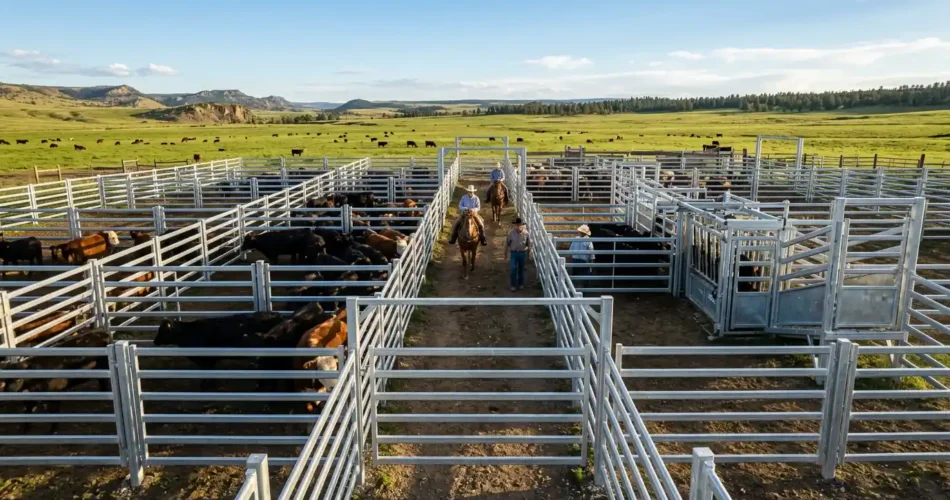
What if one equipment decision could save you hours of labor every single week? The type of cattle panels you choose shapes how smoothly - or how frustratingly - your entire operation runs.
Many ranchers end up with panels that bend under pressure, corrode after a season or two, or require two people just to move them around the yard. That means slower work, higher costs, and unnecessary stress on both you and your animals. Finding equipment built to last and easy to handle solo is harder than it should be.
That’s exactly where companies like 4 Rivers Ranch lead the way. They’ve built a reputation helping ranchers across the country design better cattle pens using heavy-duty, hot-dip galvanized steel systems engineered for one-person operation - so you get safety, efficiency, and durability without needing extra hands. In this guide, we break down the 5 most practical types of cattle panels used on working ranches today, what each one is built for, and how to choose the right fit for your setup.
What Are Cattle Panels and Why Do They Matter?
Cattle panels are prefabricated steel sections used to build corrals, working alleys, sorting areas, and temporary holding pens. Most standard panels measure 12 or 16 feet in length and stand 50 to 60 inches tall - dimensions designed to contain mature cattle without giving them leverage to push through or jump over. Unlike basic livestock fencing panels made from wire or wood, modern corral panels are built from welded steel tubing, which means they hold shape under repeated pressure from large animals and don’t require constant re-tensioning or repair.
The material matters more than most ranchers expect. Hot-dip galvanized steel panels resist rust for 20 to 30 years in open-field conditions, while ungalvanized options can start corroding within two to three seasons. A panel that fails mid-operation doesn’t just cost money - it creates a safety risk for both animals and handlers.
The right panels also directly affect how efficiently one person can manage a herd. Lightweight, well-balanced designs allow solo setup and repositioning without extra labor. Now that you know what cattle panels are and what separates a durable option from a cheap one, let’s look at the five specific types every working rancher should have on their radar.
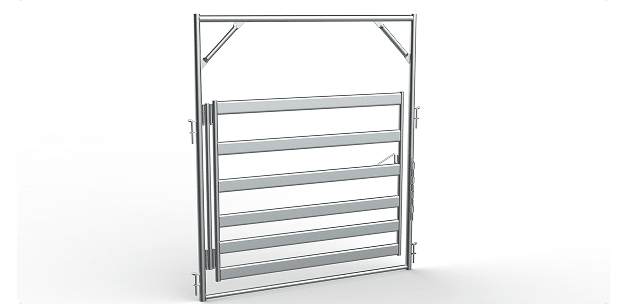
5 Types of Cattle Panels Every Rancher Should Know
Not all corral panel types are built for the same job. Choosing the wrong type for your setup leads to wasted money, slower workflows, and real safety risks. Here’s a practical breakdown of the five types most commonly used on working ranches - from small 50-head operations to large commercial yards.
1. Standard Corral Panels
Standard steel corral panels are the backbone of most permanent handling facilities. Typically built from 1⅝-inch galvanized steel tubing with six horizontal rails, they’re designed to withstand daily pressure from mature cattle without bending or warping.
- Most common size: 16 ft long × 50–52 inches tall
- Hot-dip galvanized finish adds 20–30 years of rust resistance
- Best used for holding pens, sorting alleys, and permanent corral perimeters
2. Portable Cattle Panels
Portable livestock panels are built for ranchers who need flexibility - rotating pastures, setting up temporary traps, or reconfiguring working areas between seasons. They connect using sleeve-and-pin systems that require no tools and take minutes to set up or break down.
- Lighter gauge steel (typically 1⅜-inch tubing) keeps individual panels under 85 lbs
- Not recommended for containing bulls or aggressive animals under stress
- Ideal for cow-calf pairs, yearlings, and short-term holding situations
3. Heavy-Duty Panels for Bulls
When standard panels aren’t enough, heavy duty cattle panels step in. Built with 1⅞-inch or 2-inch wall tubing and closer rail spacing, these panels are engineered specifically for high-pressure containment of bulls and large breeding stock.
- Wall thickness typically 20–30% greater than standard panels
- Lower rail spacing (under 12 inches) prevents leg entrapment during impact
- Required for any facility regularly working bulls over 1,500 lbs
4. Privacy / Half Panels (Sorting Panels)
Sorting panels - sometimes called privacy or half panels - are shorter in height (usually 30–36 inches) and used to guide cattle movement during veterinary procedures or herd separation. Solid or semi-solid faces block the animal’s line of sight, reducing hesitation and flight response.
- Available in full 16 ft lengths or 8 ft half-sections for tight spaces
- Commonly paired with head gates and squeeze chutes in working alleys
- Cattle sorting panels with solid lower faces reduce animal stress by up to 40% compared to open-rail designs
5. Round Pen / Tub System Panels
Curved tub system panels are designed around the Bud Box principle - using cattle’s natural tendency to circle back toward where they came from. A round pen cattle system replaces straight-line alleys with a curved entry that keeps animals moving forward without handlers needing to push from behind.
- Standard tub diameter ranges from 12 to 24 feet depending on herd size
- Reduces the number of handlers needed from three to one in most sorting scenarios
- Works best when paired with a straight single-file alley leading directly to the chute
Now that you know the five core corral panel types and what each one is built for, the next step is matching the right combination to your specific ranch size, herd type, and daily workflow.
How to Choose the Right Cattle Panels for Your Ranch
Any practical buying cattle panels guide starts with three questions: How many head are you running? What type of animals - cows, bulls, or mixed? And what’s your realistic budget for a setup that won’t need replacing in five years?
Panel weight matters more than most buyers expect. If you’re managing your operation solo, a standard 16 ft panel should weigh no more than 85–95 lbs to move and position without a second person. Anything heavier slows your workflow and increases injury risk during setup. That’s the design logic behind 4 Rivers Ranch equipment - their panels and cattle pens are engineered specifically for one-person operation, so you’re not dependent on extra labor to get the job done.
| Material | Avg. Weight | Lifespan | Relative Cost |
|---|---|---|---|
| Hot-dip galvanized steel | 80–95 lbs | 20–30 years | $$$ |
| Standard painted steel | 75–90 lbs | 5–10 years | $$ |
| Plastic / poly panels | 40–55 lbs | 8–15 years | $$ |
| Aluminum | 45–60 lbs | 15–25 years |
For most ranchers running 50–300 head, hot-dip galvanized steel is the best cattle panels investment long-term - the upfront cost is offset within three to four seasons by zero repainting, minimal maintenance, and full structural integrity under heavy use. Before you spend a dollar, knowing which mistakes to avoid at setup will save you even more.
Common Mistakes When Setting Up Cattle Panels
Even experienced ranchers run into corral setup errors that cost time, money, and sometimes animal welfare. Here are the four most common - and how to fix them before they become expensive problems.
1. Using undersized connectors and pins
Loose or mismatched hardware allows panels to shift under pressure. Fix: use manufacturer-spec sleeve connectors rated for at least 2,000 lbs lateral force, and check all pins after the first week of use.
2. Ignoring natural cattle movement patterns
Cattle naturally move in a curve back toward where they entered. Building straight dead-end alleys creates panic and back-pressure. Fix: orient your working alley so animals face a light source and curve slightly toward the chute.
3. Using standard panels to contain bulls
A 1,500 lb bull under stress can generate over 1,200 lbs of lateral force against a panel. Standard panels rated for cows simply flex and fail. Fix: use heavy-duty panels with 1⅞-inch tubing in any pen that regularly houses bulls.
4. Building without a zoning plan
Mixing holding, sorting, and working areas in one open space creates chaos during processing. Fix: map out at least three distinct zones - receive, sort, work - before driving a single post, following basic cattle yard setup tips used by professional facility designers.
The right panel type, properly connected and thoughtfully laid out, is what separates a frustrating operation from one that runs smoothly every single time.